Why see the Tanoura show
Why see the Tanoura show
A Sufi devotional practice, not just a dance
Tanoura takes its name from the dancer's wide, weighted skirt and traces back to the whirling practice of Sufi orders — a form of dhikr, or remembrance, in which spinning becomes a route to spiritual focus rather than simple performance.
Layer upon spinning layer of colour
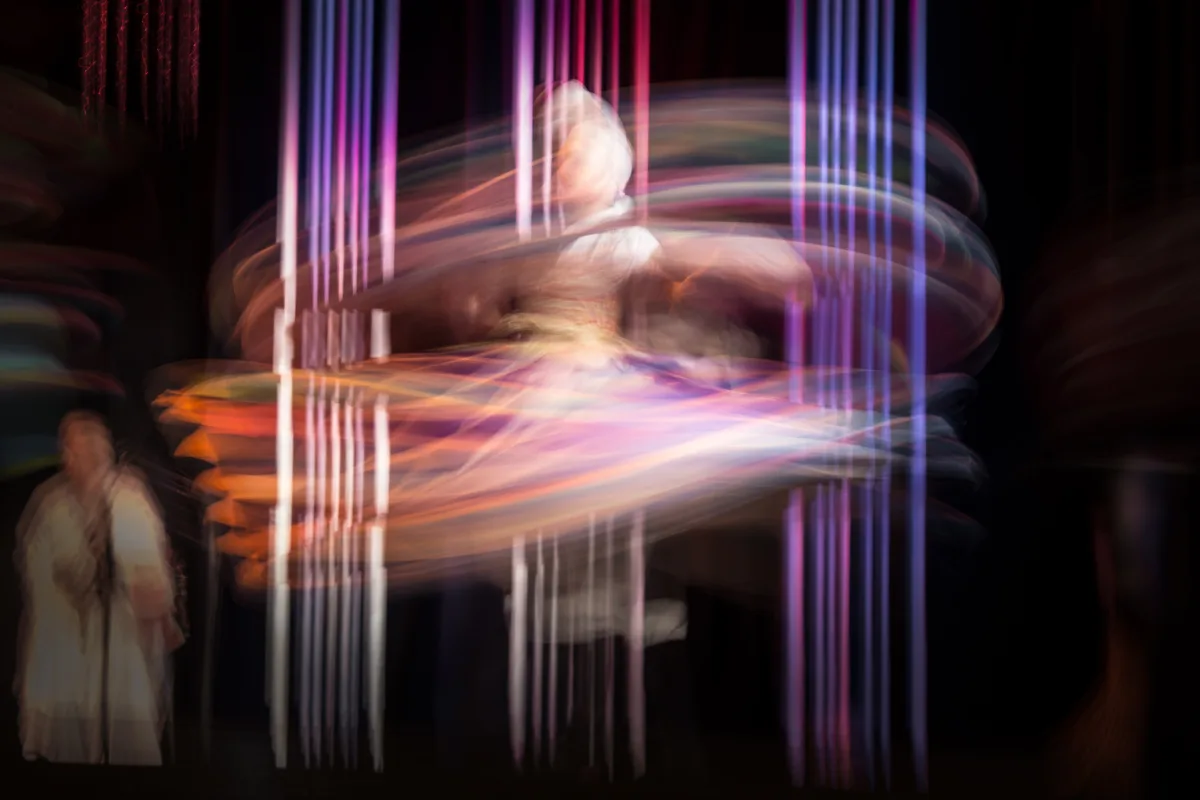
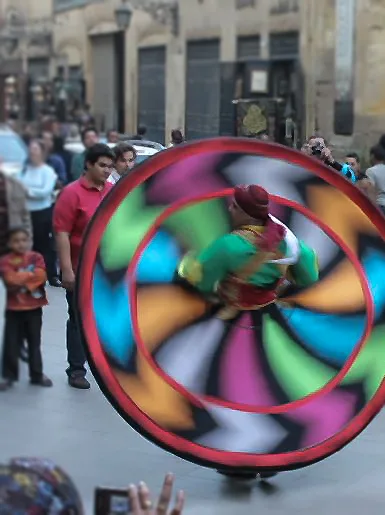
As the dance builds, performers often add extra skirts in different colours over the base layer, spinning them out into concentric discs of colour — a visually mesmerising effect built directly into the choreography.
Live takht music throughout
A live ensemble of traditional Egyptian instruments — among them the nay flute, oud and hand percussion — drives the performance's tempo from its slow opening to its fast, sustained spinning finale.
How the night unfolds
How the night unfolds
A Tanoura evening at Wekalet El Ghouri builds gradually from music into an extended spinning finale. Here's the shape of the night.
Arrival
Into the historic wekala
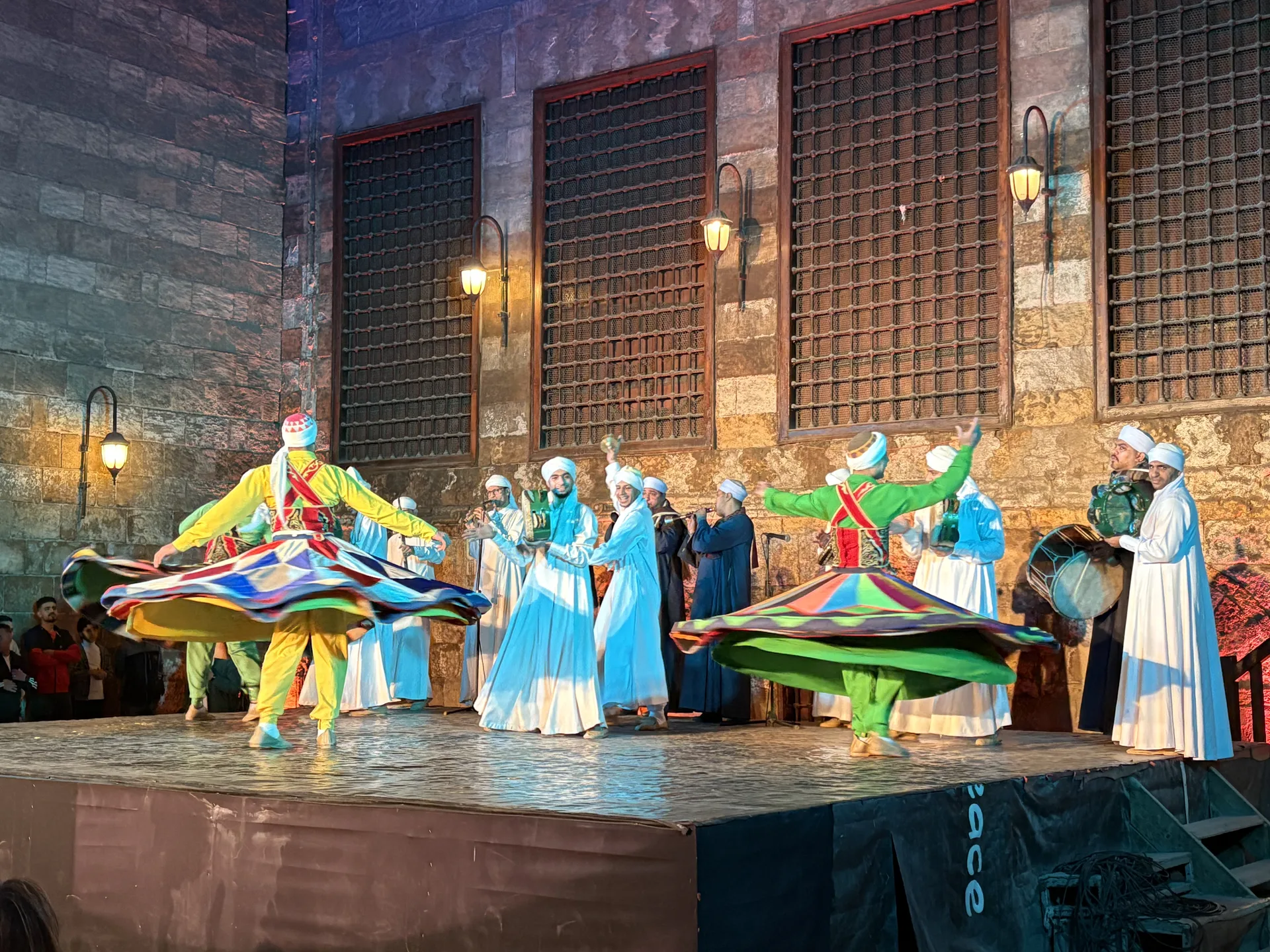
Guests take their seats inside a 16th-century Mamluk caravanserai — thick stone walls, wooden lattice windows and lantern light set the scene before the music starts.
Opening
The takht ensemble
A live ensemble opens with traditional Egyptian folk music, building the room's energy before the dancers take the floor.
First spins
The dance begins
Dancers in the tanoura's characteristic weighted skirt begin to spin, slowly at first, establishing the steady rotation that defines the whole performance.
Layered skirts
Colour upon colour
Additional coloured skirts are added and spun out over the base layer, building striking concentric rings of colour as the tempo rises.
Sustained spin
The extended finale
The performance builds to an extended, sustained spin — some dancers continuing for many minutes at speed — the night's central spectacle.
Close
The music settles
The ensemble brings the evening to its close as the final spins wind down, before guests step back out into the old streets of Islamic Cairo.
Wekalet El Ghouri, Islamic Cairo
Wekalet El Ghouri, Islamic Cairo
The show runs in a genuine historic monument rather than a purpose-built theatre — here's what to expect.
A 16th-century caravanserai
Wekalet El Ghouri was built in 1504-05 as a trading depot under Sultan Al-Ghuri, and today its restored courtyard hall hosts the Tanoura performances — a genuinely historic setting, not a recreation.
In the heart of Islamic Cairo
The venue sits near Al-Azhar and the historic core of Islamic Cairo, an atmospheric area to explore before or after the show.
Simple, intimate seating
The hall seats a modest crowd on simple bench seating around an open performance floor — an intimate setting rather than a large commercial theatre.
On the night
Dress is casual; the historic hall is not air-conditioned in the way a modern theatre would be, so a warm evening can feel warm indoors too. Photography is generally welcome.
Tanoura, in pictures
Tanoura, in pictures
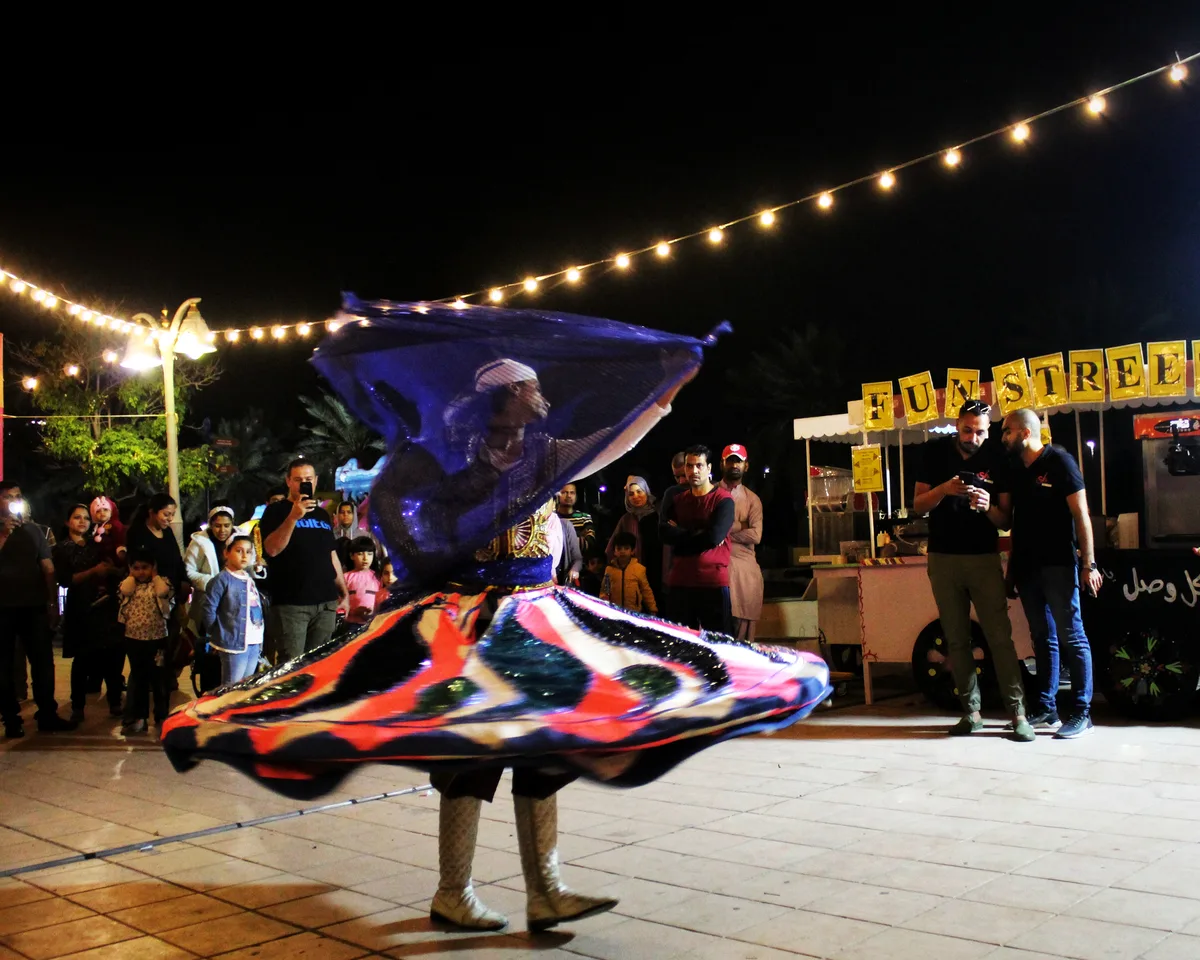
The spinning skirts, the live music and the streets of Islamic Cairo.
Ticket options & what's included
Ticket options & what's included
| Option | What it includes | Good to know |
|---|---|---|
| Standard admission | Entry to the Tanoura performance | The classic way to see the show |
| With hotel transfer | Above, plus round-trip transfer | Simplest option for a first visit |
| Combined Islamic Cairo tour | Old Cairo sightseeing plus the show | Good if pairing with daytime sightseeing |
Ways to see the Tanoura show
Find a Tanoura night for your dates
Every option below is bookable through GetYourGuide, with live availability and the final price shown in your own currency before you pay.
Planning your Tanoura night
Planning your Tanoura night
Check the schedule
Performances run on a regular weekly schedule but not nightly — check the live availability for your Cairo dates before planning your evening around it.
Consider a transfer
Wekalet El Ghouri sits in the older, narrower streets of Islamic Cairo; some ticket options bundle a round-trip transfer if you'd rather not navigate there independently after dark.
Arrive for the build-up
The performance builds gradually from music into the spinning finale — arriving on time means you catch the full arc of the evening, not just the fast final spins.
Dress simply and comfortably
Casual dress is fine; the historic hall isn't modern air-conditioned, so dress for the season rather than for an indoor theatre.
Booking flexibility
Listings offer free cancellation up to 24 hours before, so you can lock in a Tanoura night without losing flexibility in your Cairo itinerary.
Planning a Tanoura evening in Cairo
Planning a Tanoura evening in Cairo
Seeing the Tanoura show in Cairo: tickets, tradition and what to expect
The Sufi roots of the spinning, the historic Wekalet El Ghouri setting, and how to plan an evening in Islamic Cairo.
Read more → SYMBOLS IN THE SKIRTWhat the Tanoura Dancer's Spinning Skirt Symbolises
Tanoura literally means "skirt" — the weighted, multi-layered garment at the centre of the dance carries centuries of cosmic, seasonal and devotional meaning.
Read more → ROOTS OF THE TURNThe Sufi Roots Behind Cairo's Tanoura Performance
Before it became a folk-art stage show, tanoura's spinning drew on Sufi dhikr, a devotional practice worth understanding — and approaching — with real respect.
Read more → THE TROUPE & THE HALLAl-Tannoura Troupe and the Historic Wekalet El-Ghouri Hall
The dancers spin inside a genuine 500-year-old merchants' inn — how a Mamluk-era trading hub became home to Egypt's best-known heritage dance troupe.
Read more → AN EVENING IN OLD CAIROMaking an Evening of Islamic Cairo Around the Tanoura Show
Wekalet El-Ghouri sits at the edge of Cairo's historic core, close enough to Al-Muizz Street and Khan el-Khalili to turn one show into a full evening out.
Read more → THREE WAYS TO SEE IT SPINTanoura vs Turkish Whirling Dervishes vs a Nile Cruise Show
Egyptian tanoura, Turkey's Mevlevi Sema and a Nile dinner-cruise spin segment all trace to the same Sufi root, but the setting and tone differ sharply.
Read more →GEO/FAQ
Tanoura show questions
What is Tanoura?
Tanoura is an Egyptian folk-art descendant of Sufi whirling (dhikr) practice, in which dancers spin for extended periods in a distinctive weighted skirt, often adding extra coloured layers over the course of the performance to create striking spinning discs of colour, all set to live traditional music.
Is this the same as Turkish whirling dervishes?
They share Sufi roots but differ in style — Egyptian Tanoura is generally more visually dynamic and colourful, with layered skirts and a faster, more theatrical build than the more meditative, restrained Turkish sema ceremony.
Where does the show take place?
Performances run at Wekalet El Ghouri, a restored early-16th-century Mamluk-era caravanserai in Islamic Cairo near Al-Azhar — a genuine historic monument, not a purpose-built theatre.
How long does the performance run?
The full evening, including the live music opening and the Tanoura performance itself, typically runs around 1.5-2 hours, building from slower opening music to an extended spinning finale.
Is it suitable for children?
Yes — the show is a family-friendly cultural performance, though the historic venue has simple bench seating rather than theatre-style comfort, worth knowing for younger children.
Can I combine it with other Cairo experiences?
Yes — some tickets bundle a round-trip transfer or a broader Islamic Cairo sightseeing itinerary. Each option's inclusions and live price are shown in the booking widget, with free cancellation up to 24 hours before.